

When choosing a CO₂ laser tube for cutting or engraving, many buyers look first at output power. For example, they may ask how thick a material an 80 W, 100 W or 150 W laser tube can cut through, and what processing speed the machine can achieve.
But maximum output power alone does not fully reflect a laser tube’s processing performance. A high-quality CO₂ laser tube also needs to maintain a stable gas discharge over extended operating periods, supporting consistent laser output.
For industrial laser equipment, stable discharge supports more controllable laser energy, consistent processing results and reliable continuous operation. That is why discharge stability is a priority at SPT Laser.
1. What Is Discharge Stability in a CO₂ Laser Tube?
A CO₂ glass laser tube is a gas laser that uses high-voltage direct current to excite its working gas. In a typical CO₂ laser tube, the gas mixture consists mainly of carbon dioxide (CO₂), nitrogen (N₂) and helium (He).
When the high-voltage power supply applies sufficient voltage, the gas inside the laser tube ionizes and forms a glow discharge.
Electrons transfer energy to the gas molecules through collisions, exciting their molecular vibrational energy levels. Nitrogen transfers energy to CO₂ molecules, which produce light through stimulated emission. Helium helps depopulate the lower laser levels and transfer heat to the laser tube walls.
Optical feedback from the resonator causes light to pass repeatedly through the excited gas, where stimulated emission amplifies it. Part of the resulting laser light exits the laser tube as the output beam.
Discharge stability is the laser tube’s ability to maintain a stable, controlled gas discharge under specified operating conditions, without abnormal discharge or significant performance fluctuations caused by changes in the discharge state. A stable glow discharge provides an important foundation for consistent laser gain.
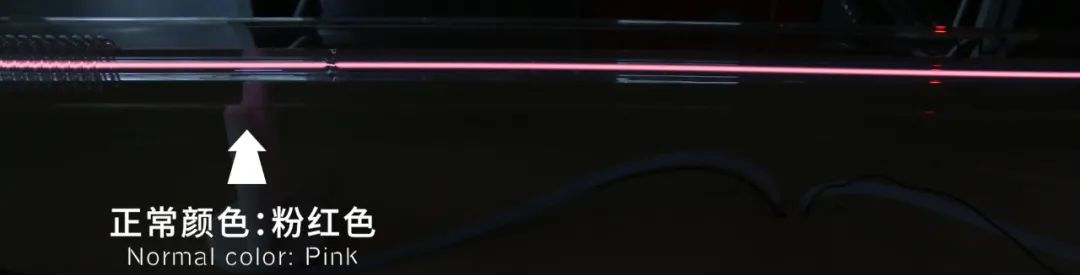
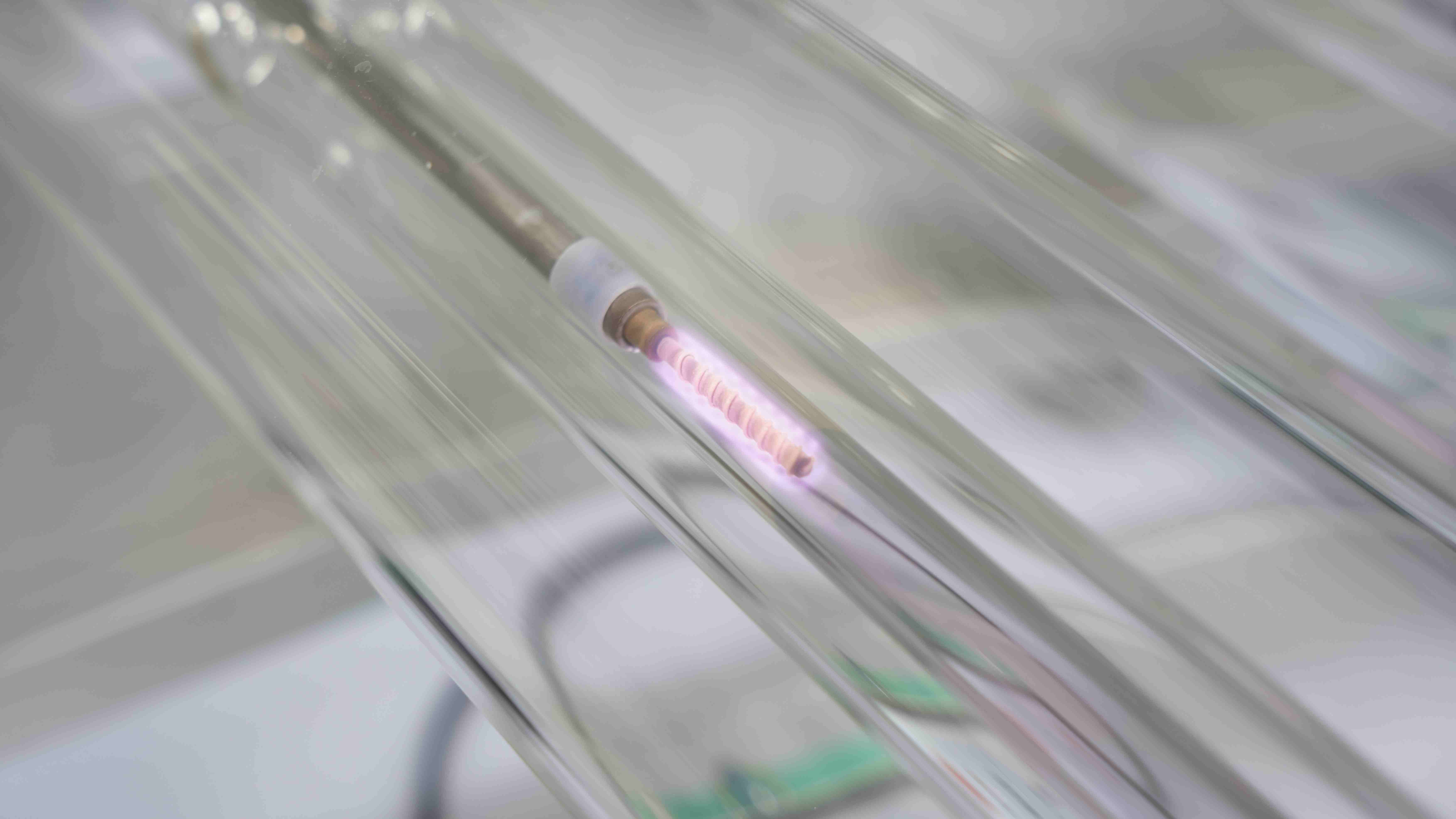
The visible glow in a CO₂ laser tube during operation.
Discharge stability and output power stability are closely related, but they are distinct concepts. The optical resonator, cooling system and laser power supply, as well as the discharge itself, can all affect the final laser output.
2. Why Does Discharge Stability Matter?
More consistent cutting results
Laser cutting works by concentrating energy on a material, causing it to heat, melt, vaporize or decompose locally. Significant fluctuations in laser output can change how much energy reaches the material.
At a fixed cutting speed, the laser may fail to cut through the material in some areas if power is insufficient. Excessive changes in laser energy can also lead to variations in kerf width, edge color and the size of the heat-affected zone. For materials such as acrylic, wood and leather, stable output can result in more uniform cuts.
A stable gas discharge reduces the likelihood of abnormal changes in laser gain, providing a more consistent energy source for continuous cutting.
More uniform engraving depth and detail
Laser engraving often relies on controlling output energy to achieve different depths and grayscale effects. During high-speed engraving or fine-detail work, significant power fluctuations can cause uneven depth and affect the appearance of text, patterns and details.
In batch production, quality matters across the entire run—not just on the first piece. A stable discharge provides a more consistent source of laser energy for detailed engraving. The final result also depends on the power supply’s dynamic response, control signals, motion system and processing parameters.
A dependable foundation for extended operation
Laser machines used in sign making, crafts, packaging and industrial production often run for long periods. As operating time increases, gas temperature, discharge conditions and the thermal state of the optical system can change.
An unstable discharge may be accompanied by a drop or fluctuation in output power, affecting continuous production. Careful discharge structure design, control of the working gas and appropriate cooling can reduce the adverse effects of thermal changes. Discharge stability therefore matters both for individual jobs and for performance over extended operation.
3. Five Factors That Affect CO₂ Laser Tube Discharge Stability
Discharge stability is not determined by one component alone. It depends on the combined effects of the working gas, discharge laser tube structure, electrodes, sealing and thermal management.
(1) Working gas purity and mixture ratio
The working gas is the medium that enables a CO₂ laser tube to produce laser light. CO₂, N₂ and He each have different roles, and their proportions affect discharge characteristics, energy conversion efficiency and operating temperature.
Impurities can also influence the discharge. Moisture and other unwanted residual gases may change its characteristics and affect long-term performance. Gas purity, the proportions of the gases and control of the filling process are therefore important parts of laser tube manufacturing.
SPT Laser pays close attention to gas filling and manufacturing process control to establish a suitable working gas environment inside each laser tube.
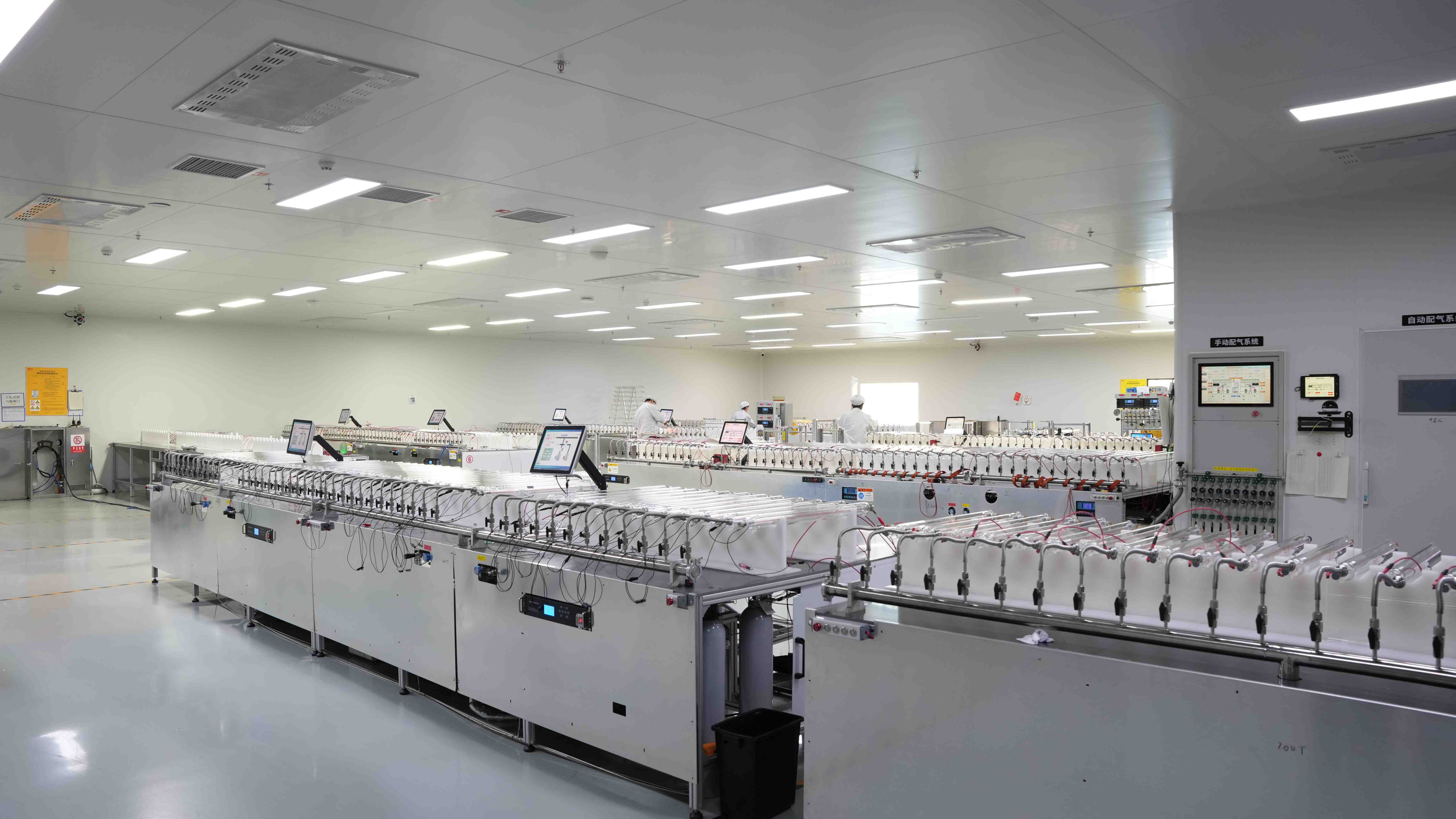
SPT Laser’s standardized CO₂ laser tube gas-filling workshop.
(2) Discharge laser tube geometry and manufacturing precision
The discharge laser tube is an essential part of a glass CO₂ laser tube. Its internal diameter, length, straightness and geometric consistency affect the discharge and are closely related to the distribution of laser gain and the design of the optical resonator.
Significant geometric deviations can affect the electric field distribution and discharge conditions within the laser tube. The position of the discharge tube relative to the resonator can also affect how well the effective gain region matches the laser mode.
Good laser tube design therefore calls for attention to structural precision and manufacturing consistency as well as output power. SPT Laser focuses on glass tube forming, resonator manufacturing and related structural controls to support stable operation.
(3) Electrode materials and discharge control
Electrodes carry high-voltage electrical energy into the gas discharge region. During extended operation, their surface condition, sputtering behavior and interaction with the working gas can all affect laser tube performance.
Poor electrode design can lead to abnormal discharge, electrode material sputtering or gas contamination. Selecting suitable materials, optimizing electrode geometry and matching the electrodes to the discharge region are therefore important considerations for long-term stability.
A stable, properly matched high-voltage laser power supply is also essential for maintaining normal discharge.
(4) Sealing and gas environment
Glass CO₂ laser tubes generally use a sealed-off design. After filling, a reliable seal is needed to maintain the internal working environment.
If the seal deteriorates, outside gases can enter the laser tube and change the gas composition and pressure, affecting both the discharge and laser output. Reliable sealing therefore supports not only service life but also the stability of the discharge environment over time.
SPT Laser uses sealing technology in its T Series and places emphasis on quality control throughout glass laser tube manufacturing, catalyst treatment and precision gas filling.
(5) Temperature control and cooling
Temperature has a significant effect on discharge conditions and output power. Only part of the electrical energy supplied to a laser tube is converted into laser light; much of the remainder is released as heat.
If heat is not removed effectively, the working gas temperature can rise, changing laser gain and energy conversion efficiency. A stable cooling system is therefore particularly important for glass CO₂ laser tubes.
SPT Laser recommends choosing a cooling system suited to the specific laser tube model and keeping cooling water temperature, flow rate and circulation within the product’s requirements. Proper cooling helps maintain stable output and reduces the risk of equipment damage from localized overheating.
4. How SPT Laser Approaches CO₂ Laser Tube Stability
At SPT Laser, stability is a product design priority. For a glass CO₂ laser tube, stability is more than a parameter measured during final testing. It is a system-level requirement that runs through product design, material selection, manufacturing and use.
Precision Manufacturing Process Control
For T Series CO₂ laser tubes, SPT Laser pays close attention to each stage of production, from glass laser tube manufacturing and catalyst treatment to resonator manufacturing and precision gas filling. Controlling key processes supports product consistency and reduces the effect of manufacturing variation on performance.
Catalytic technology
During prolonged discharge, plasma-induced chemical reactions occur in the working gas. Some CO₂ molecules can dissociate, changing the gas composition over time.
A properly designed catalytic system can promote recombination reactions among relevant gas components, which can slow changes in the working gas. SPT Laser uses catalytic technology in certain glass laser tube series and considers long-term gas stability in product design and manufacturing.
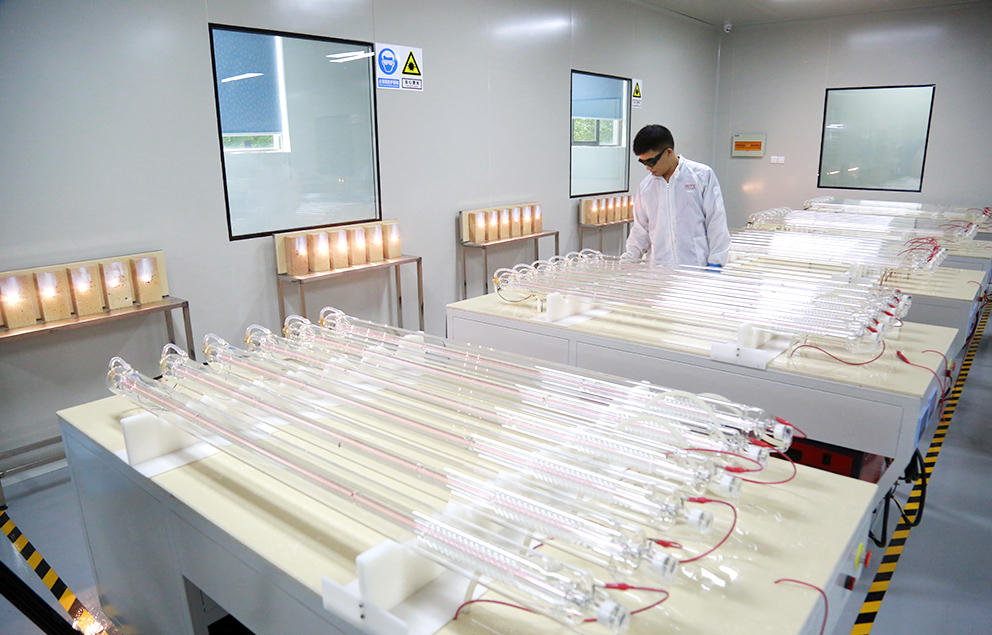
CO₂ laser tube aging and catalyst treatment at SPT Laser.
Catalytic coating and optical resonator technology
A stable gas discharge provides the conditions for laser generation. The optical resonator influences how effectively the laser is generated and coupled out of the laser tube. The optical properties of the resonator mirrors, including the output coupler, together with their alignment and mounting accuracy, can affect laser power, mode and beam quality.
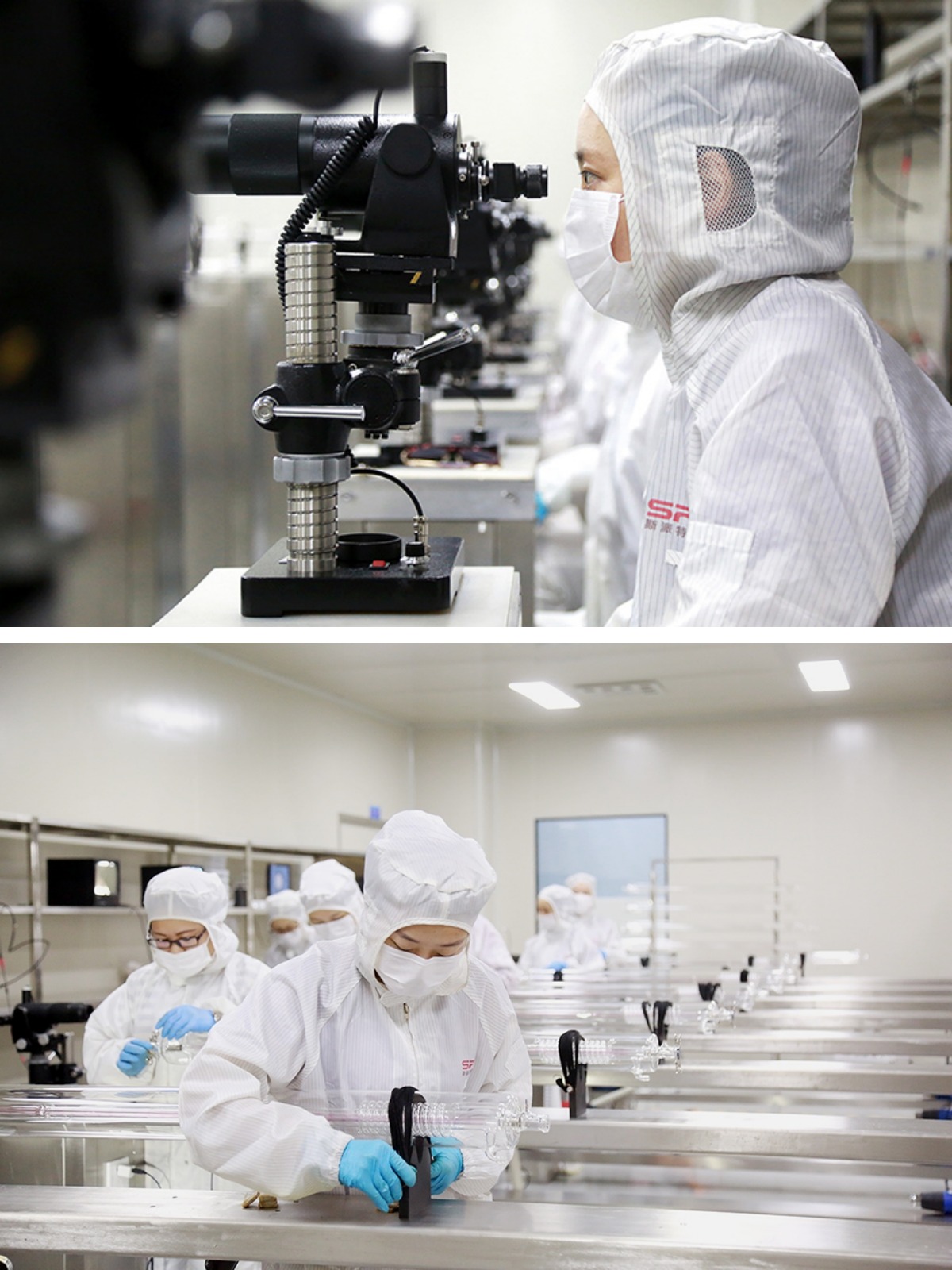
CO₂ laser tube assembly and optical component installation at SPT Laser.
SPT Laser focuses on the design and manufacture of its laser tube optical systems, applies catalytic coating technology across its product series and continues to consider the effect of optical performance on laser output.
SPT Laser’s vacuum-sputtered catalytic coating process.
Matching the gas discharge to the optical resonator supports a stable laser source for cutting and engraving applications.
5. What Does a Stable CO₂ Laser Tube Offer Customers?
For laser equipment manufacturers, distributors and end users, stability has practical value beyond a technical specification:
· More consistent cutting quality. Stable laser energy can reduce variations caused by output power fluctuations, making cutting more controllable.
· More reliable engraving. Consistent output supports uniform engraving depth and improves the appearance of patterns and text.
· Better support for continuous production. Stable discharge combined with appropriate thermal management supports consistent equipment performance during extended runs.
· More predictable maintenance. Reliable laser tube design can reduce the risk of downtime caused by abnormal tube performance and support dependable equipment operation.
Consistency between laser tubes is also important to OEMs. More consistent performance from one batch of laser tubes to the next can reduce uncertainty during machine setup and support more consistent product quality.
6. How Can You Evaluate CO₂ Laser Tube Stability?
Rated or maximum output power alone is not enough to assess a laser tube. Consider the following as well:
(1) Output power stability. Under specified operating conditions, monitor output power fluctuations after the laser tube has warmed up sufficiently.
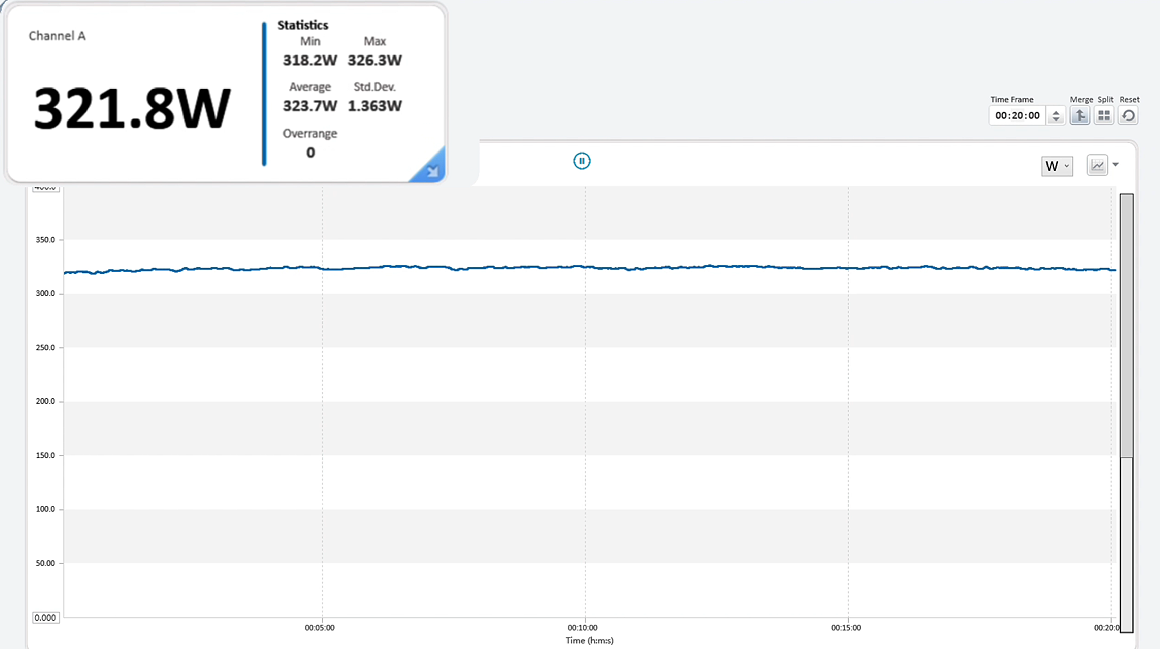
Continuous output power stability test of the SPT U300 laser tube (300 W)
(2) Performance during continuous operation. Check for abnormal power loss or significant fluctuations after extended operation.
(3) Discharge condition. Under safe, controlled test conditions, check whether the laser tube maintains a normal glow discharge without abnormal flickering, localized arcing or other discharge irregularities.
(4) Beam quality. Check whether the beam spot shape, beam pointing and relevant optical parameters meet the product requirements.
(5) Long-term reliability. Review power degradation, failures and maintenance performance under the specified conditions of use.
The visible glow’s color or brightness alone cannot establish a laser tube’s output power or quality. A sound evaluation combines electrical parameters, optical measurements and actual operating conditions.
7. Proper Use Helps Maintain Laser Tube Performance
Even a carefully designed and manufactured laser tube needs the right operating conditions. SPT Laser recommends the following:
(1) Use a high-voltage power supply matched to the laser tube model.
(2) Keep operating current within the specified range and avoid prolonged operation above the rated current.
(3) Keep the cooling system working properly and prevent blocked water flow, air bubbles and localized overheating.
(4) Keep the output coupler and external optics clean.
(5) Install the laser tube according to its requirements and maintain accurate optical alignment.
(6) Regularly inspect high-voltage connections, the cooling system and machine operating conditions.
Proper installation, operation and maintenance allow the laser tube to perform as designed.
8. SPT Laser: Stability at the Core
The stability of a glass CO₂ laser tube depends on the whole system. The working gas, discharge structure, electrodes and seals all play a part, as do the optical resonator, manufacturing processes and cooling.
SPT Laser focuses on stability and consistency in real-world applications. By continually improving product design and manufacturing processes, we supply CO₂ laser tubes to laser cutting and engraving machine manufacturers and end users around the world.
We believe a good laser tube should provide sufficient output power and deliver reliable laser energy throughout actual production.
Explore SPT Laser CO₂ Laser Tubes
SPT Laser offers glass CO₂ laser tubes in a range of power ratings for laser cutting, engraving and related industrial equipment.
If you are looking for a stable, reliable CO₂ laser tube for a cutting or engraving machine, contact the SPT Laser team for product specifications, technical support and a laser solution suited to your application.